
Understand
Sukhoi Su-9 Fishpot: The Soviet Interceptor Built to Catch the U-2
Overview
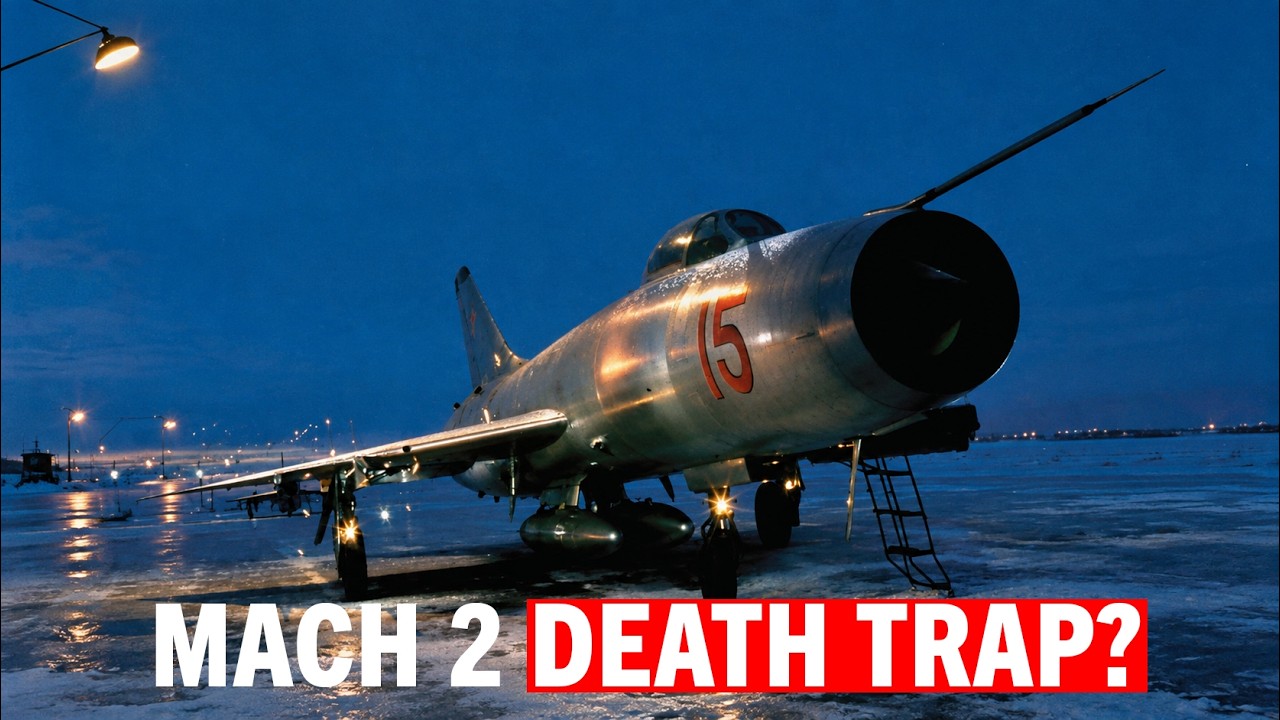
The Sukhoi Su-9 (NATO reporting name 'Fishpot') was a high-altitude Soviet interceptor developed during the 1950s by Pavel Sukhoi's OKB-51. Designed to counter high-altitude intruders like the U-2 and British Canberra bombers, the aircraft achieved Mach 2 capabilities and high operational ceilings but suffered from numerous mechanical, engine, and handling defects during its early service. Despite its high performance, high accident rates, and maintenance challenges, it served extensively with Soviet Air Defense (PVO) regiments before being phased out in the 1970s in favor of more advanced aircraft like the Su-15 and MiG-25.
Key points
- The Su-9 evolved from the T3 family and was designated officially as the Su-9-51 weapon system, paired with the TSD30 radar and K5 (Alkali) beam-riding missiles.
- Early production and pre-production models suffered from frequent accidents, engine surging, and structural issues, leading to significant modification programs including variable intake geometry and blow-in doors.
- The aircraft set a world altitude record of 94,658 feet on July 14, 1959, using a modified version.
- Although deployed to intercept high-altitude threats like U-2 spy planes, Su-9 units struggled with initial coordination and training issues, and U-2s were primarily downed by surface-to-air missiles like the S-75 rather than intercepted successfully by Su-9s.
- The upgraded Su-11 (T3-8M) variant featured the Orol radar and heavier K8 missiles, though it also faced early operational accidents.
- The Su-9 was never exported and was eventually replaced in frontline PVO regiments by the Su-15 and MiG-23/25 during the 1970s.